Easy Crochet Froggy Bucket Hat Pattern: Step-by-Step Guide
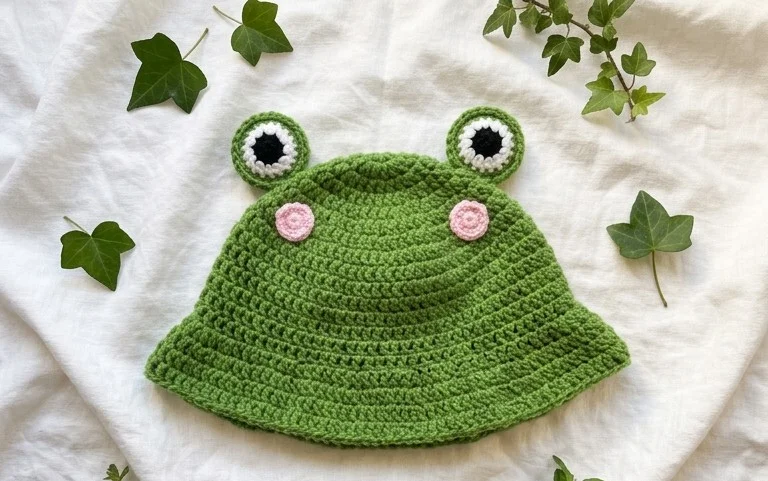
This whimsical hat features two large, round eyes perched on top of a soft, squishy crown that keeps the sun out of your eyes during long summer afternoons. Making this piece requires just a few basic stitches, making it a friendly choice if you are still gaining confidence with your hook and yarn. You will spend your time practicing circular increases and working in continuous rounds to build the main shape. It is a rewarding project that transforms plain green yarn into a fun accessory for your collection. I find the construction process soothing and surprisingly quick for such a personality-filled result.
Why This Project Is Worth Making
The Classic Crochet Dishcloth uses the moss stitch to create a textured, durable fabric that excels at scrubbing dishes. This project is ideal for using up leftover cotton yarn because a single dishcloth requires less than one full skein of standard worsted weight cotton. Because it relies on a simple two-row repeat, you can complete a cloth in one or two evenings of casual stitching. It also serves as an excellent way to practice maintaining consistent tension, which is essential for uniform stitch height in larger projects like sweaters or blankets.
I managed to finish three of these dishcloths over the weekend while watching television. They hold up much better in the wash than the synthetic versions I used to buy at the store.
— Sarah, home crafter
Pattern Overview & Skill Level
- Skill Level: Beginner
- Approximate Time: 1 to 2 hours
- Construction: Worked in rows from the bottom up, finishing with a simple border
- Finished Dimensions: 8 inches by 8 inches
Materials & Supplies Needed
- Yarn: Worsted weight (#4) 100% cotton yarn, approximately 60 yards per dishcloth.
- Hook Size: 5.0 mm (H-8) crochet hook.
- Notions: Tapestry needle for weaving in ends, sharp scissors.
- Yarn Substitutions: You may use a cotton-linen blend for increased durability and scrubbing power, though this may make the finished cloth feel slightly stiffer. Avoid acrylic yarns, as they do not absorb water well and will melt if they come into contact with hot pots or pans.
Stitch Guide & Abbreviations (US Terms)
- ch = chain
- st(s) = stitch(es)
- sc = single crochet
- sk = skip
- sp = space
- sl st = slip stitch
- Moss Stitch: A pattern created by alternating single crochet stitches and chain spaces, where the single crochet of the new row is worked into the chain space of the previous row.
Step-by-Step Pattern Instructions
Main Body
Begin by making a foundation chain of 31.
- Row 1: Sc in the 4th ch from the hook, *ch 1, sk 1 ch, sc in the next ch; repeat from * to the end. Turn. (15 sc, 14 ch-1 spaces)
- Row 2: Ch 2, sc in the first ch-1 space, *ch 1, sk 1 sc, sc in the next ch-1 space; repeat from * to the last ch-1 space, sc in the turning chain space. Turn. (15 sc, 14 ch-1 spaces)
- Rows 3-30: Repeat Row 2 until the piece measures approximately 8 inches square.
Border
Do not fasten off after Row 30. Instead, rotate the piece to work along the side edge.
- Round 1: Ch 1, sc evenly around the entire perimeter of the dishcloth, placing 3 sc into each corner to ensure the fabric lays flat without curling.
- Finish: Join with a sl st to the first sc. Fasten off and weave in all loose ends securely using a tapestry needle.
Care & Washing Instructions
- Machine wash in warm water on a gentle cycle to remove oils and food residue.
- Lay the dishcloth flat on a clean towel to air dry, reshaping it into a perfect square if it has stretched during the wash.
- Do not use fabric softener, as it leaves a waxy residue that significantly reduces the absorbency of the cotton fibers.
Pro Tips & Common Mistakes to Avoid
Maintain consistent tension by holding your yarn with a steady grip throughout the rows; if your stitches are too tight, the fabric will become stiff, while too-loose stitches will cause the dishcloth to lose its scrubbing shape. Use a stitch marker at the start of each row to help you identify the final chain space, which is a common spot for beginners to accidentally skip stitches. When weaving in your ends, run the yarn through the stitches in three different directions to ensure they do not pull out during heavy use. You can easily adjust the size of the dishcloth by starting with any odd-numbered foundation chain; adding or removing chains will change the width, while adding more rows will increase the length.
Frequently Asked Questions
Can I use a larger hook for this pattern?
Using a larger hook will result in a looser, more open fabric. While this makes the cloth work up faster, it will be less effective for scrubbing stubborn food off plates. Stick to the recommended 5.0 mm hook for a dense, functional textile.
Is this pattern suitable for someone who has never crocheted before?
Yes, this is an excellent starter project. It only requires the single crochet stitch and the chain stitch, allowing you to focus entirely on your rhythm and edge consistency without complicated stitch patterns.
Can I sell the dishcloths I make from this pattern?
You are welcome to sell finished items made from this pattern as long as you provide credit to the designer. Do not sell or distribute the pattern itself, as the instructions are protected by copyright.
Why does the edge of my work look uneven?
Uneven edges usually occur from missing the very last stitch or the turning chain space at the end of a row. Always count your stitches at the end of every row to ensure you have 15 single crochet stitches across the width.
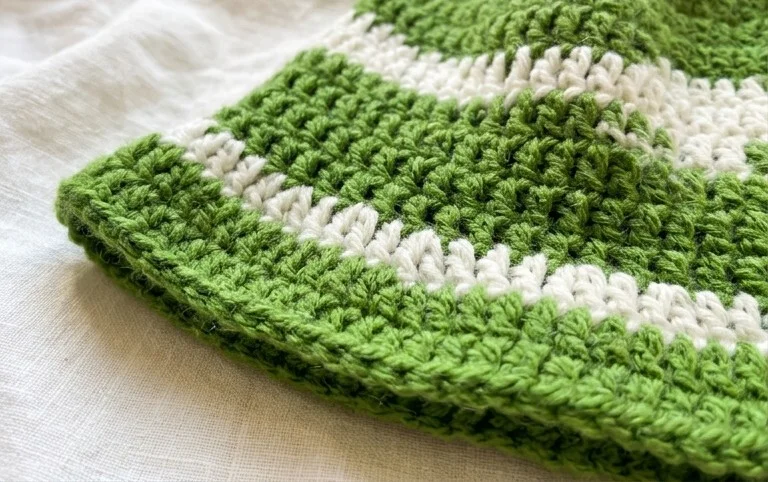
You now have a charming new accessory that brings a bit of playful personality to any sunny outfit. Try working yours in a muted sage green for a subtle look or go bold with a bright lime shade to really make those frog eyes stand out. Share a photo of your finished work on social media so others can see your color choices. I encourage you to browse the rest of the blog for more patterns that use simple techniques to build unique, handmade staples for your wardrobe.