Deck the Mantel with This Festive Crochet Garland
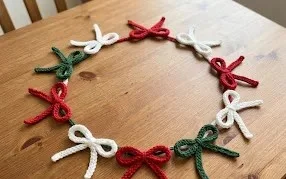
Soft cotton yarn gives a handmade Christmas garland a gentle texture that looks right at home draped across a mantel, wrapped around a banister, or hung along a bookshelf. This pattern uses small crocheted motifs joined with chains, so the finished strand is light enough to hang without pulling on hooks or branches. Beginners can practice chain stitches and simple single crochet while working on pieces that are quick to finish one at a time. It is also a useful project for gift makers, since you can adjust the length to suit a friend’s tree or a small holiday display. In the pattern, you’ll find guidance for keeping the motifs even, joining them neatly, and choosing colors that work with your decorations. Make the garland in classic red and green, or use cream and gold for a softer look.
Why You’ll Love This Pattern
A firm cotton crochet dishcloth is useful at the sink, easy to wash, and small enough to finish in a few evenings. This beginner-friendly pattern uses single crochet throughout, so you can focus on steady tension and even edges instead of learning several stitches at once.
The simple rectangle works well with one solid color or leftover cotton yarn. Its close fabric is suited to wiping counters and washing dishes, and the finished cloth makes a practical handmade gift. You can also make a small stack without needing much storage space or a large yarn budget.
The rows were easy to keep track of, and the cotton made a sturdy cloth that feels good in my hand.
— Lena, home crocheter
Pattern Overview & Skill Level
- Skill Level: Beginner. You should know how to chain and make a single crochet stitch.
- Approximate Time: About 2–3 hours, depending on your pace and how often you pause to count.
- Construction: Worked flat in rows from the bottom edge upward. Each row has 30 single crochet stitches, with one turning chain that does not count as a stitch.
- Finished Dimensions & Sizing: Approximately 8.5 × 7.5 in (21.5 × 19 cm) after washing and drying flat. Your result will vary with tension and yarn.
Materials & Supplies Needed
- Yarn: About 100 yd (91 m) of worsted-weight (#4) 100% cotton yarn. One color is enough; a contrast color can be used for the optional finishing round.
- Hook: 5.0 mm (US H-8). Use the hook that gives you a fabric that is firm but still comfortable to work into.
- Notions: Tapestry needle for weaving in ends, scissors, and a ruler or measuring tape.
- Substitutions: Choose cotton or a cotton blend labeled for dishcloths. A thinner yarn makes a smaller, finer cloth; a thicker yarn makes a larger, bulkier one and may need a larger hook. Acrylic is less absorbent and can be less suitable for hot cookware, so check the yarn label before using it at the sink.
Gauge: 14 single crochet stitches and 16 rows measure about 4 × 4 in (10 × 10 cm) in an unstretched swatch. Gauge matters for the finished size and yarn use, but a small difference will not prevent the cloth from working.
Stitch Guide & Abbreviations (US Terms)
- ch: Chain.
- sc: Single crochet. Insert the hook into the stitch, yarn over and pull up a loop, yarn over again and pull through both loops.
- st / sts: Stitch / stitches.
- sl st: Slip stitch. Insert the hook into a stitch, yarn over, and pull through the stitch and the loop on the hook.
- RS / WS: Right side / wrong side. This plain-texture cloth has no required right side; these terms help identify the faces if you want consistent finishing.
The turning chain at the start of each row is for height only. Do not work into it or count it as a stitch.
Step-by-Step Pattern Instructions
Use cotton yarn and a 5.0 mm hook. Keep your turning chain loose enough that the first stitch of the next row is easy to find. Stitch counts at the end of each row include only single crochet stitches.
Dishcloth
- Foundation: Ch 31.
- Row 1: Sc in the second ch from the hook and in each ch across. Turn. (30 sts)
- Row 2: Ch 1, sc in each st across. Turn. (30 sts)
- Rows 3–30: Repeat Row 2, keeping 30 stitches in every row. Do not add a stitch in the turning chain. (30 sts each row)
Measure the work after Row 30. It should be close to 8.5 × 7.5 in (21.5 × 19 cm). If it is substantially shorter or longer, check your gauge before adding or removing rows. The cloth will still be usable if your personal size differs slightly.
Finishing
Fasten off, leaving a tail about 6 in (15 cm) long. Thread the tail onto a tapestry needle and weave it through the backs of several stitches, then change direction and weave through a few more. Trim the remaining end close to the fabric without cutting the stitches.
For a simple edge, leave the cloth as a rectangle. For a tidier border, join yarn with a slip stitch at a corner, then work one single crochet into each stitch along the top and bottom edges and one single crochet at the end of each row along the sides. Work 3 single crochet stitches in each corner stitch so the border can turn neatly. Join with a slip stitch to the first border stitch, fasten off, and weave in the ends. The border is optional and uses additional yarn.
Care & Washing Instructions
- Wash cotton yarn according to its label; many cotton dishcloths can be machine-washed in warm water, around 40°C (104°F).
- Dry flat or tumble-dry on the setting allowed by the yarn label; reshape the corners while damp.
- Block or gently reshape the cloth after washing, smoothing the rows flat without stretching them.
Pro Tips & Common Mistakes to Avoid
- Keep your tension even. If the foundation chain is noticeably tighter than the rows, make the chain with a slightly larger hook, then switch to the 5.0 mm hook for Row 1.
- Count every row. Place a stitch marker in the first stitch of each row if you tend to miss the last stitch near the turning chain; move it up as you work.
- Weave in each end through the backs of several stitches, changing direction once. A short tail woven through only one row can loosen after repeated washing.
- To change the size, add or remove foundation chains to change the width and work more or fewer rows to change the length. More stitches and rows use more yarn, so allow extra yardage for a larger cloth.
Frequently Asked Questions
Can I use a different yarn fiber?
For an absorbent dishcloth, cotton is the best starting point. A cotton blend can work if its label allows regular washing. Acrylic may feel softer, but it is less absorbent and is not the best choice for handling hot dishes.
How can I make the dishcloth wider or longer?
Add chains to the foundation for more width, keeping the starting chain one stitch longer than the desired number of single crochet stitches. For more length, work additional rows. Both changes increase yarn use, and the finished dimensions will depend on your gauge.
Is this pattern suitable for a first crochet project?
Yes. It uses only chains and single crochet stitches, worked in straight rows. The main thing to watch is the stitch count: each row should finish with 30 stitches so the sides stay even.
May I sell dishcloths made from this pattern?
Check the designer’s terms before selling finished items, and follow any credit or listing requirements. This pattern text does not grant permission to copy or redistribute the instructions.
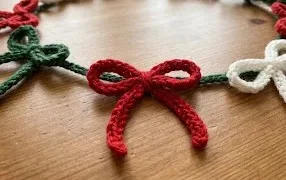
Your finished garland brings a handmade touch to a mantel, tree, or doorway, and each crocheted motif adds a little texture among the lights and ornaments. For a simple variation, work the motifs in one color and use a contrasting shade for the joining chain. You can also add or remove motifs to fit a narrow shelf or a longer banister. If you make one, share a photo on Pinterest or your favorite social media platform so others can see how you styled it. Then explore more free crochet patterns on the blog for your next handmade project.