Easy Crochet Cat Paw Fingerless Gloves Free Pattern
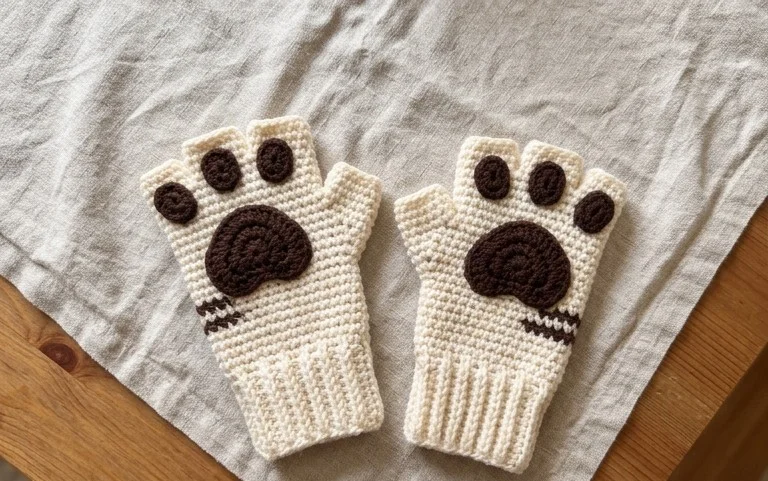
Soft yarn and raised paw pads give these fingerless gloves a playful cat-inspired look, while the open fingers leave your hands free to type, turn pages, or hold a warm mug. The finished pair covers the palms and wrists without feeling bulky, so it suits chilly mornings at home or a walk on a cool day. Beginners can enjoy the steady rhythm of basic crochet stitches, and the paw details make the project satisfying for makers who want a small change of texture and color. These gloves also make a thoughtful handmade gift for cat lovers. As you work, you’ll learn how the glove shape forms around a thumb opening and how simple surface details create the recognizable paw design. Choose a smooth yarn so the stitches stay easy to see, and take time to check the fit as you go.
Why You’ll Love This Pattern
A firm cotton dishcloth made in single crochet has a dense, slightly textured surface that works well for wiping counters and washing dishes. This beginner-friendly pattern uses one stitch throughout, so you can focus on keeping the edges straight rather than learning a complicated repeat.
The small square is easy to carry, takes only a few hours to finish, and uses less than one ball of many worsted cotton yarns. Its simple shape also makes it practical for checking your tension: the stitch count stays the same on every row, and the finished dimensions give you a clear gauge reference.
The rows were easy to count, and the cotton made a sturdy cloth that held its shape after washing.
— Maya, beginning crocheter
Pattern Overview & Skill Level
- Skill Level: Beginner. You need to know how to chain and single crochet.
- Approximate Time: About 2–3 hours, depending on your pace and how often you pause to check your stitches.
- Construction: The dishcloth is worked flat in back-and-forth rows, beginning with a foundation chain. There is no seam or separate border.
- Finished Dimensions & Sizing: About 8 × 7.5 inches (20 × 19 cm) at the stated gauge, before washing. Cotton can relax or shrink slightly, so check the cloth after its first wash.
Materials & Supplies Needed
- Yarn: About 75–90 yards of worsted-weight cotton yarn, also called medium weight or #4. One solid color makes the stitches easy to see; use a smooth, tightly spun yarn for a firm, absorbent cloth.
- Hook Size: 5.0 mm / H-8 crochet hook. Use the hook that lets you match gauge without making the fabric stiff or loose.
- Notions: Tapestry needle for weaving in the yarn ends, scissors, ruler or tape measure, and one stitch marker if you want to mark the first stitch of a row.
- Substitutions: A similar-weight cotton or cotton-linen blend is a suitable substitute. A thinner yarn makes a smaller, lighter cloth; a thicker yarn makes a larger, heavier cloth and may need a larger hook. Acrylic is less absorbent than cotton, so it is not the best choice for a dishcloth.
- Gauge: 15 single crochet stitches and 16 rows measure 4 inches (10 cm) square after lightly washing and drying the swatch. Make a small swatch if you want the finished cloth close to the listed dimensions.
Stitch Guide & Abbreviations (US Terms)
- ch: chain.
- sc: single crochet. Insert the hook in the indicated stitch, yarn over and pull up a loop, yarn over again, then pull through both loops on the hook.
- st / sts: stitch / stitches.
- rep: repeat.
- turn: Rotate the work so you can crochet back across the row.
- ch 1 turning chain: The chain made at the start of each row to reach the working height. It does not count as a stitch in this pattern.
Step-by-Step Pattern Instructions
Use US crochet terms throughout. The turning chain does not count toward the stitch total. Work into the first single crochet after turning, not into the turning chain. Count each row before moving on; every row must have 30 stitches.
Dishcloth
- Foundation: Ch 31. Keep the chain relaxed so the lower edge does not pull in.
- Row 1: Sc in the second ch from the hook and in each ch across. Turn. (30 sts)
- Row 2: Ch 1, sc in each st across. Turn. (30 sts)
- Rows 3–30: Rep Row 2. After Row 30, do not turn. (30 sts each row)
Fasten off, leaving a yarn tail of about 6 inches (15 cm). Thread the tail onto a tapestry needle and weave it through the backs of several stitches. Change direction once before trimming the end close to the fabric. Weave in the foundation tail in the same way.
Lay the dishcloth flat and measure it. If it is longer or shorter than expected, that is usually a gauge difference rather than a mistake, provided you have 30 stitches in every row. Wash it before first use to remove any spinning or handling residue and to see how the cotton settles.
Care & Washing Instructions
- For cotton yarn, machine wash with similar colors in cool or warm water, up to 40°C (104°F); use a gentle cycle if the yarn label recommends it.
- Reshape and dry flat when possible. Avoid high heat, which can shrink or distort cotton.
- While damp, smooth the edges and corners flat by hand. Blocking is optional; do not stretch the cloth beyond its original shape.
Pro Tips & Common Mistakes to Avoid
- Keep your tension even: Cotton has little stretch, so tight foundation chains can make the bottom edge narrower than the rest. If your chain feels firm, remake it with a relaxed hand or use a hook one size larger just for the chain.
- Count before turning: Place a marker in the first stitch of each row if you tend to miss the last stitch. The turning chain is not a stitch, and working into it can add an unwanted stitch at the edge.
- Hide ends securely: Weave each tail through the backs of several stitches, then change direction. A short tail pulled through only one stitch can work loose with repeated washing.
- Adjust size with a plan: Add or remove foundation chains to change the width, keeping the chain count one higher than the number of stitches you want. Add rows to change the length. A larger cloth uses more yarn; a smaller cloth uses less.
Frequently Asked Questions
Can I use a cotton blend instead of 100% cotton?
Yes. A cotton-linen blend can make a firm cloth with a slightly different feel. Check the yarn label for washing guidance, and make a gauge swatch because blends may stretch or drape differently from pure cotton.
How can I make the dishcloth wider or narrower?
Change the number of foundation chains, then work the same number of single crochets in each row. For example, a 36-stitch width begins with 37 chains. The fabric width changes with your gauge, and a wider or longer cloth needs more yarn.
Is this pattern suitable for my first crochet project?
Yes, if you can make a chain and single crochet. The main challenge is keeping 30 stitches in every row. Count each row as you finish it, and undo the last few stitches if you notice an edge becoming wider or narrower.
May I sell dishcloths made from this pattern?
You can sell finished items only if the pattern designer’s terms allow it. Check those terms before listing the cloth, and write your own product description and photographs rather than presenting the pattern as your own.
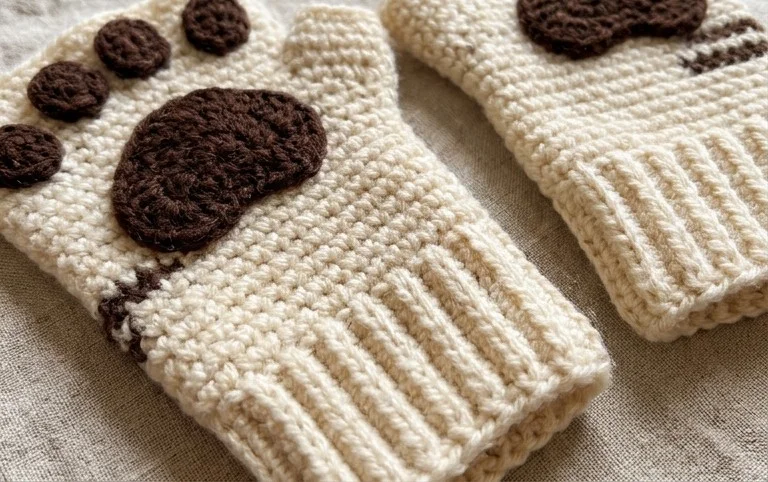
Seeing the finished paw pads sit neatly across the gloves is a lovely reward for a project made one steady stitch at a time. If you want a simple variation, crochet the pads in a contrasting color that matches the recipient’s favorite cat or coat. Before wearing or gifting the pair, check that the thumb opening feels comfortable and that the wrist edge stays snug without pulling; a gentle hand wash and flat drying can help the stitches keep their shape. Share a photo of your finished gloves on Pinterest or your favorite social media page so other cat lovers can see your color choices. When you’re ready for another relaxing project, browse the blog for more free crochet patterns and find a new make for your yarn basket.