Easy Crochet Gingerbread Man Pattern for Christmas
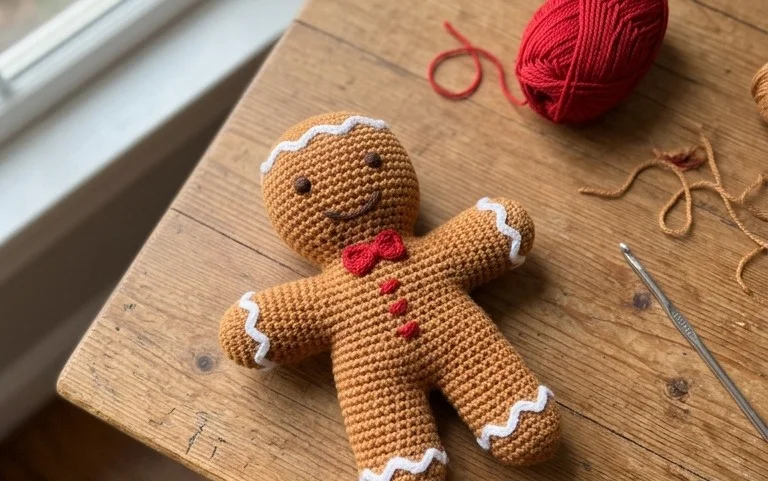
Warm brown yarn, little white icing details, and a soft, squishy shape give this crocheted gingerbread man the familiar look of a holiday cookie. It makes a cheerful ornament, a small handmade gift, or a cozy addition to a seasonal shelf, and the compact size means you can finish one without setting aside a whole weekend. Beginners can practise working neat single crochet stitches and shaping a small figure, while experienced crocheters can enjoy adding personal touches to the face and decorations. In this pattern, you’ll find guidance for the materials, construction, and finishing details that bring the character to life. Take your time with the stuffing and embroidery, and your gingerbread friend will have a tidy shape and a face that feels entirely its own.
Why You’ll Love This Pattern
A firm cotton dishcloth is useful at the sink, easy to wash, and simple to make with a single crochet stitch. This beginner pattern creates a flat rectangle with no shaping, seams, or complicated repeats, so it is a good way to practise keeping your edges straight.
The cloth uses about 75 yards of worsted cotton, which makes it a practical project for a leftover ball. At roughly 8 by 8.5 inches, it fits comfortably in the hand for washing dishes or wiping counters. Make a set in matching colors for a housewarming gift, or choose a different shade for each cloth.
The rows were easy to follow, and I had a useful cotton cloth finished in one evening. I marked the first stitch of each row and my edges stayed much neater.
— Amy, beginner crocheter
Pattern Overview & Skill Level
- Skill Level: Beginner. You need to chain, single crochet, turn, and fasten off.
- Approximate Time: 2–3 hours, depending on your pace and tension.
- Construction: Work one flat rectangle in rows, beginning with a foundation chain. There is no joining or seaming.
- Finished Dimensions & Sizing: About 8 inches wide by 8.5 inches long after washing and drying flat. The finished size can vary with yarn, hook, and personal tension.
Gauge: 15 single crochet stitches and 16 rows measure 4 inches square in the main fabric. Gauge is less important than for a fitted garment, but it helps you estimate the finished size and yarn use.
Materials & Supplies Needed
- Yarn: About 75 yards of worsted-weight (#4) 100% cotton yarn. One color is enough; a small amount of a second cotton color can be used for a striped version, but changing colors is optional.
- Hook: 5.0 mm / H-8 crochet hook. If your fabric feels stiff, try a 5.5 mm / I-9 hook and check the dimensions again.
- Notions: Tapestry needle for weaving in the starting and ending tails, scissors, and a removable stitch marker to identify the first stitch of each row.
- Substitutions: Choose another smooth, washable cotton yarn of similar thickness. A thinner yarn makes a smaller, lighter cloth; a bulkier yarn makes a thicker, larger cloth and may need a larger hook. Acrylic can be used for a cleaning cloth, but it does not absorb water as well as cotton.
Stitch Guide & Abbreviations (US Terms)
- ch: Chain. Yarn over and pull the yarn through the loop on the hook.
- sc: Single crochet. Insert the hook in the stitch, yarn over and pull up a loop, then yarn over and pull through both loops on the hook.
- st / sts: Stitch / stitches.
- rep: Repeat.
- turn: Rotate the work so the next row is crocheted across the opposite side of the fabric.
The turning chain does not count as a stitch in this pattern. Work the first single crochet of each row into the first stitch, not into the turning chain. This keeps the stitch count at 30 and helps prevent the sides from narrowing.
Step-by-Step Pattern Instructions
Dishcloth
- Foundation: Make 31 ch. The chain at the hook is not counted as a stitch.
- Row 1: Sc in the second ch from the hook and in each ch across. Turn. (30 sts)
- Rows 2–34: Ch 1, sc in each st across, then turn. Keep the turning chain loose and do not work into it. (30 sts each row)
After Row 34, check that the cloth is close to a square and that both side edges have 30 stitches across each row. If the fabric is noticeably wider or narrower than 8 inches, your tension differs from the gauge; that is fine for a dishcloth, but use the same tension throughout.
Finishing
Cut the yarn, leaving a tail about 6 inches long. Pull the tail through the loop on your hook to fasten off. Thread the tail onto a tapestry needle and weave it through several stitches along the edge, then change direction and weave through a few more stitches so it stays secure during washing. Weave in the starting tail in the same way. Do not pull the edge tight while hiding the ends.
Wash the cloth once before using it. Cotton can relax slightly after washing, and a damp cloth is easier to shape. Lay it flat, smooth the corners, and let it dry completely.
Care & Washing Instructions
- Wash cotton in cool or warm water, up to 40°C, with like colors; follow the yarn label if it gives a lower temperature.
- Dry the cloth flat when possible, or use a dryer only if the yarn label allows it.
- While damp, reshape the corners and sides by hand; blocking is usually unnecessary, but a flat dry helps even the edges.
Pro Tips & Common Mistakes to Avoid
- Keep your tension even, especially in the foundation chain. If that chain is much tighter than the rows, the lower edge will pucker; make the chain with a relaxed hand or use a slightly larger hook just for it.
- Place a removable marker in the first stitch of each row. Count 30 stitches before turning, since accidentally skipping the last stitch is a common reason for slanted edges.
- When weaving in ends, pass the yarn through the backs of several stitches and change direction once. A short tail tucked through only one stitch can work loose after repeated washing.
- For a larger cloth, add chains to the foundation and work more rows, keeping the same number of single crochets in every row. Each additional stitch and row uses more yarn, so allow extra yardage rather than relying on the 75-yard estimate.
Frequently Asked Questions
Can I use a different yarn fiber?
Yes, but smooth cotton is the most absorbent choice for a dishcloth. A cotton blend may work if its label allows frequent washing. Acrylic is less absorbent and can feel warmer or less suited to wiping wet dishes. Any change in yarn thickness can also change the cloth’s size.
How can I make the cloth wider or longer?
To make it wider, add chains to the foundation, then single crochet into each chain across. To make it longer, add rows. Keep the number of stitches consistent across every row, and expect a larger cloth to use more yarn and take longer to finish.
Is this a suitable first crochet project?
Yes. The pattern uses only chains and single crochet, with no increases, decreases, or joining. Practise the single crochet stitch on a short swatch first if you are new to crochet, then count each row to keep the rectangle even.
May I sell dishcloths made from this pattern?
Check the designer’s terms before selling finished items, and follow any stated credit or usage requirements. The pattern instructions themselves should not be copied or redistributed unless the designer permits it.
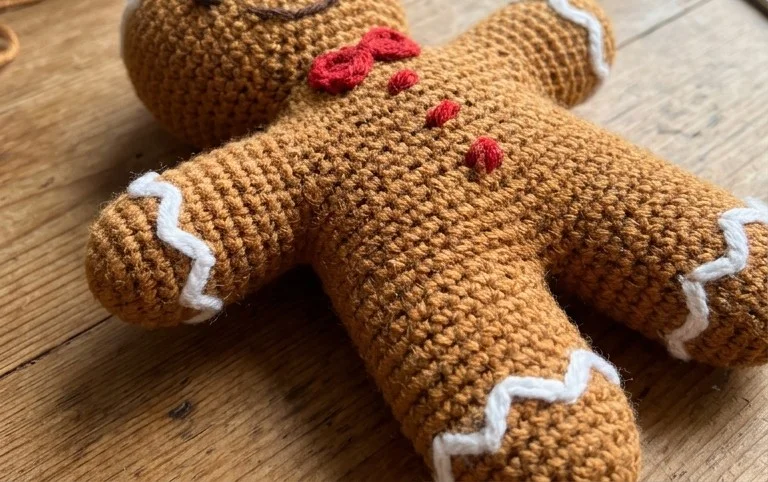
Your finished gingerbread man has a soft handmade feel and plenty of personality, whether you hang it on the tree or tuck it into a gift. For a simple variation, use cream yarn for a pale gingerbread look, or choose a thinner yarn and smaller hook for a petite ornament. You can also change the embroidered icing lines to give each figure its own expression. When yours is finished, share a photo on Pinterest or your favorite social platform so other makers can see your version. Then explore more free crochet patterns on the blog for your next small seasonal project.