Easy Mini Crochet Stockings: Free Christmas Pattern
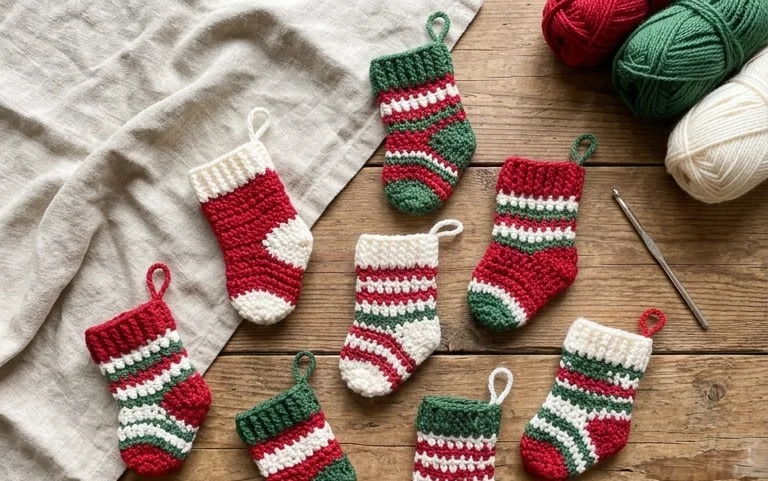
A small crocheted stocking brings a handmade touch to a tree branch, mantel, or gift package, and its compact size makes it satisfying to finish without a long stretch of crafting time. These mini stockings have the familiar shape of a full-size holiday stocking in a little form that feels sweet and useful. They suit beginners ready to practice working evenly, gift makers putting together small handmade presents, and anyone who likes adding yarn decor around the home. Use them to decorate a tree, tie one onto a wrapped gift, or tuck in a tiny treat. In this pattern, you’ll follow the stitch instructions and shape the fabric into a stocking, with clear guidance to help you keep track of the small details as you work.
Why You’ll Love This Pattern
A firm cotton dishcloth is useful at the sink, easy to wash, and small enough to finish in an evening. This beginner-friendly pattern uses single crochet throughout, so you can focus on keeping the edges straight rather than learning several new stitches. The simple shape also makes it a practical project for using leftover worsted-weight cotton. Make a set in matching colors for everyday use or as a small housewarming gift.
The finished cloth measures about 6 inches square, a handy size for wiping counters or washing dishes by hand. A crocheter who completed the pattern might describe it this way:
The rows were easy to keep track of, and the cotton made a sturdy cloth that feels good in my hand. I finished mine in an afternoon.
— Anna, home crocheter
Pattern Overview & Skill Level
- Skill Level: Beginner. You need to know how to chain and single crochet.
- Approximate Time: About 1.5–2.5 hours, depending on your pace and how often you pause to count.
- Construction: The dishcloth is crocheted flat in back-and-forth rows, with one single crochet in each stitch. No seams or edging are required.
- Finished Dimensions & Sizing: About 6 × 6 inches, or 15 × 15 cm, when crocheted to the gauge below. Cotton yarn and individual tension can change the final size slightly.
Gauge: 4 single crochet stitches and 4 rows measure about 1 inch (2.5 cm) in the main fabric. Gauge is not essential for a usable cloth, but checking it helps you estimate the finished dimensions and yarn use.
Materials & Supplies Needed
- Yarn: About 75 yards of worsted-weight cotton yarn, also labeled medium or #4. Choose one color or use a different cotton shade for each cloth.
- Hook Size: 5.0 mm / H-8 crochet hook. If your fabric feels stiff, try a 5.5 mm / I-9 hook; if it feels loose and holey, try a 4.5 mm / 7 hook.
- Notions: Tapestry needle for weaving in the ends, scissors, and a ruler or tape measure for checking gauge.
- Substitutions: A similar-weight cotton-linen blend can work, though it may feel firmer and drape less. Cotton is absorbent and handles repeated washing well. Acrylic yarn is less absorbent and may feel warmer or slipperier in use, so it is not the first choice for a dishcloth. Changing yarn weight or hook size will change the fabric and finished dimensions.
Stitch Guide & Abbreviations (US Terms)
- ch = chain.
- sc = single crochet.
- st = stitch.
- sts = stitches.
- rep = repeat.
- RS = right side, the side you choose to show as the front.
- WS = wrong side, the opposite side.
- Turning chain: The chain made at the start of a row to bring the yarn up to working height. In this pattern, ch 1 does not count as a stitch.
To make a single crochet, insert the hook in the indicated stitch, yarn over and pull up a loop, then yarn over and draw through both loops on the hook. Work into the top loops of each stitch unless the instructions say otherwise.
Step-by-Step Pattern Instructions
Use US crochet terms throughout. The starting chain is the foundation row setup; it is not included in the row count. Place each single crochet in the next stitch, and do not work into the turning chain.
Dishcloth
- Foundation: Ch 25. (25 ch)
- Row 1 (RS): Sc in the second ch from the hook and in each ch across. (24 sts)
- Row 2 (WS): Ch 1, turn, sc in each st across. (24 sts)
- Rows 3–24: Rep Row 2. Keep the same stitch count for every row and check that the fabric stays close to square. (24 sts per row; 24 rows total)
Finishing
After Row 24, fasten off, leaving a tail long enough to weave in securely. Pull the tail through the final loop. Thread it onto a tapestry needle and weave it through several stitches on the wrong side, then change direction and weave through a few more stitches to help secure it. Trim the excess without cutting the fabric. Repeat with the starting tail. Smooth the cloth flat and check that the corners are square.
Care & Washing Instructions
- Wash cotton dishcloths in a machine with warm water, around 40°C / 104°F, or follow the yarn label if it gives a different limit.
- Lay flat to dry, or tumble dry on low if the yarn label allows it; high heat can shrink or roughen some cotton yarns.
- Reshape the damp cloth by gently pulling the corners square. Blocking is optional; avoid stretching the cloth beyond its intended size.
Pro Tips & Common Mistakes to Avoid
- Keep tension even: Cotton has less stretch than many acrylic yarns. If your hand tightens as you go, pause and relax your grip so the later rows do not become narrower.
- Count each row: Check for 24 single crochet stitches before turning. Place a marker in the first stitch of a row if the edge is hard to see. If you adapt the cloth to work in rounds, put a marker at the start of every round.
- Hide ends securely: Weave each tail through the wrong side of the fabric, changing direction once. Do not pull so tightly that the edge puckers, and avoid leaving short ends that can work loose in the wash.
- Change size with care: To make a wider cloth, add an even number of chains to the foundation, then work one fewer single crochet than the chain count. Add rows for extra length. A larger cloth uses more yarn; a cloth made with thicker yarn or a larger hook also grows, so allow extra yardage.
Frequently Asked Questions
Can I use a different yarn fiber?
Yes, but cotton is a practical choice because it absorbs water and tolerates frequent washing. A cotton-linen blend can feel firmer, while acrylic is less absorbent. Check the yarn label for washing instructions and expect the cloth’s texture and dimensions to change if you use another fiber or weight.
How can I make the dishcloth larger or smaller?
For a wider cloth, change the starting chain and keep one fewer single crochet than the chain count on Row 1. For more length, work extra rows; for less length, stop earlier. Measure as you go, since yarn weight, hook size, and tension all affect the dimensions and the amount of yarn needed.
Is this a good first crochet project?
Yes. It uses only chains and single crochet, and the straight rows make it easy to practice. Count the 24 stitches at the end of each row; missed stitches near the edges are the most common reason a beginner’s cloth becomes narrower.
Can I sell dishcloths made from this pattern?
You can sell your finished work if the designer’s terms allow it. Check the pattern’s current usage rules before listing items, and write your own product description and photographs rather than presenting the pattern itself as your work.
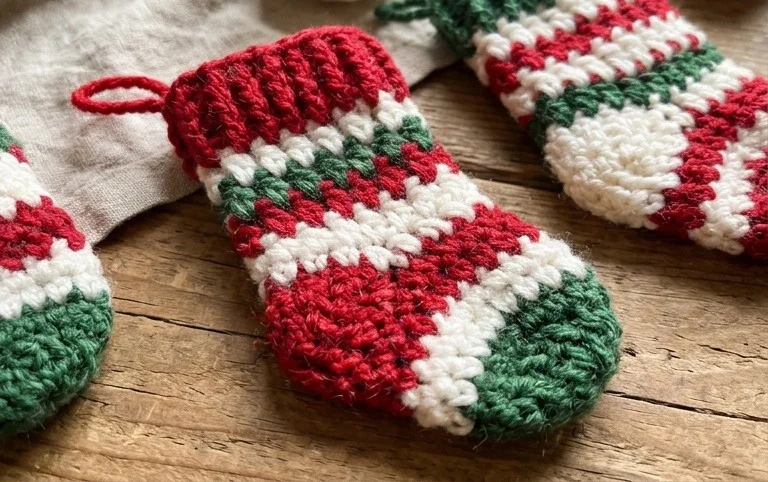
Your finished mini stocking is a cheerful little piece of handmade holiday decor, ready to hang on a tree or attach to a gift. For a simple variation, work a set in two contrasting colors so the stocking and cuff stand out from each other. You could also make several in one shade for a neat, coordinated look across a mantel. Take a photo of your finished work and share it on Pinterest or your favorite social media platform; seeing the different colors and finishing touches is part of the fun. When you’re ready for another small project, explore more free crochet patterns on the blog for ideas to keep your hook busy.