Make a Textured Crochet Headband with a Chic Twisted Front
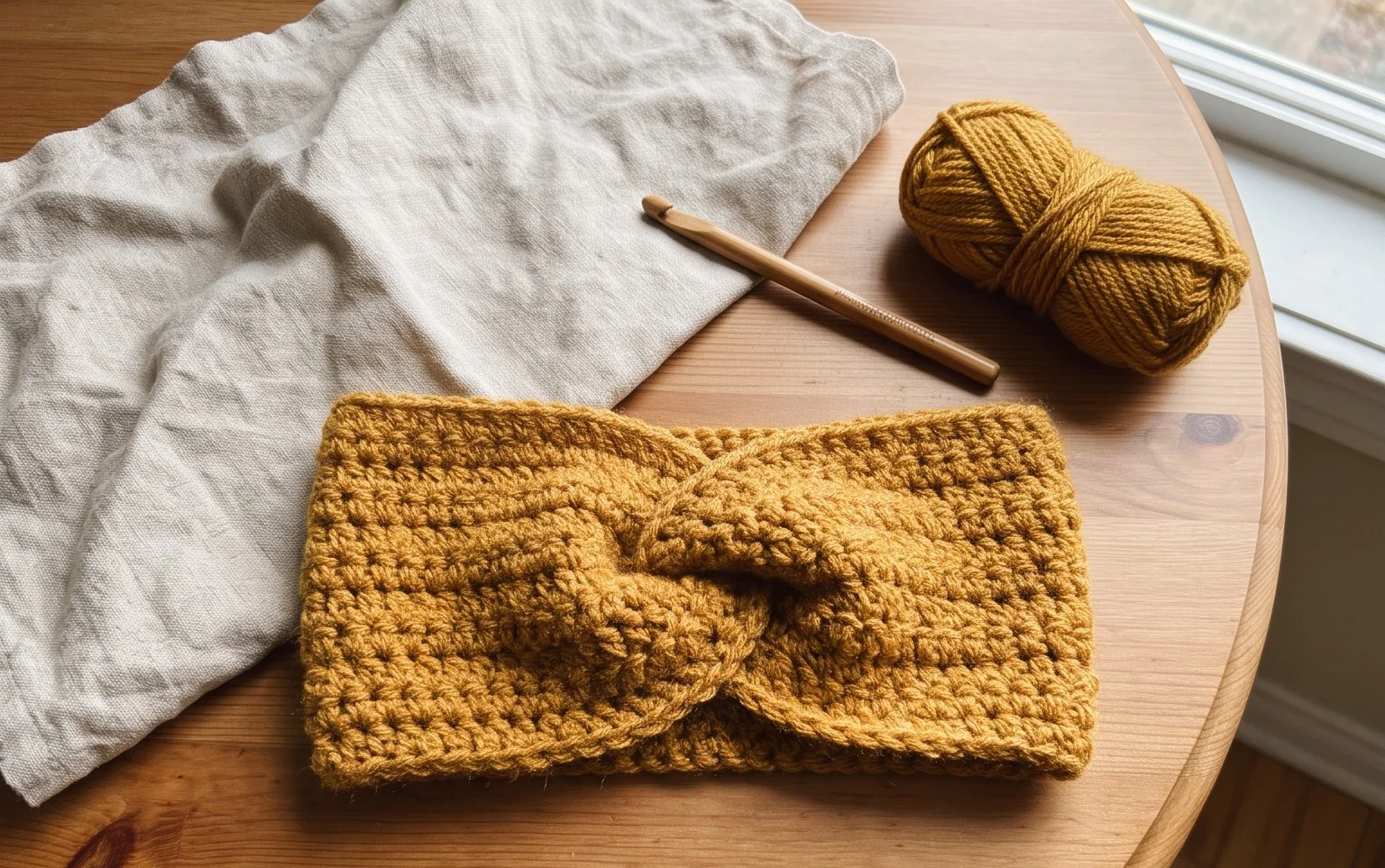
A soft band of crochet ribbing keeps ears warm on a chilly walk, while a neat twist at the front gives this headband its gathered, turban-style shape. The project suits newer crocheters ready to practice consistent stitches, and it makes a thoughtful handmade gift that fits easily into a small yarn budget. Choose a smooth worsted-weight yarn for clear stitch definition, or use a soft wool blend for extra warmth. The work is compact and portable, so you can crochet a few rows during a quiet evening without setting up a large project. In this pattern guide, you’ll learn how ribbed crochet fabric is made, how the ends are arranged to form the twist, and how to adjust the band for a comfortable fit. A simple color change can make each finished headband feel personal.
Why You’ll Love This Pattern
This simple crochet dishcloth is worked in rows of single crochet, so the fabric is easy to count and has a firm texture for wiping counters or drying dishes. A single skein of worsted cotton is enough for several cloths, making this a practical way to use leftover cotton yarn.
The pattern uses one stitch throughout and has no shaping or sewing. That makes it a useful first project for practicing even tension, turning chains, and neat edges. Each cloth takes about two to three hours, depending on your pace, and the finished rectangle folds flat for storage or gift wrapping.
The rows were easy to follow, and the cotton cloth came out thick enough for everyday kitchen cleanups.
— Sample maker, beginner crocheter
Pattern Overview & Skill Level
- Skill Level: Beginner. You need to chain and make single crochet stitches.
- Approximate Time: Two to three hours, including weaving in the starting and finishing tails.
- Construction: A flat rectangle worked back and forth in rows. The turning chain does not count as a stitch.
- Finished Dimensions & Sizing: Approximately 6.25 × 5.5 in (16 × 14 cm), based on the gauge below. Small differences are normal; measure your swatch before starting if the finished size matters.
Materials & Supplies Needed
- Yarn: About 45 yd (41 m) of worsted-weight cotton yarn, US #4, in one color. Choose 100% cotton for absorbency and heat tolerance. A dishcloth usually takes less than one standard 50 g skein.
- Hook: 5.0 mm / H-8 crochet hook.
- Notions: Tapestry needle for weaving in ends, scissors, and a ruler or tape measure.
- Gauge: 16 single crochet stitches and 18 rows measure 4 in (10 cm) after washing and drying. Use the same hook and yarn for the swatch as for the cloth.
- Substitutions: A similar worsted-weight cotton or cotton-linen blend is suitable. Acrylic is less absorbent and may not handle hot cookware well, so keep it for light cleaning rather than use near heat. A thicker yarn makes a larger, heavier cloth; a finer yarn makes a smaller, thinner one. Check the yarn label and make a swatch before substituting.
Stitch Guide & Abbreviations (US Terms)
- ch: Chain.
- sc: Single crochet. Insert the hook in the stitch, yarn over, pull up a loop, yarn over, and pull through both loops.
- st(s): Stitch or stitches.
- RS: Right side, the side you choose to show.
- WS: Wrong side, the opposite side.
- Turning chain: The chain made at the beginning of a row to bring the hook to working height. In this pattern, it does not count as a stitch.
Step-by-Step Pattern Instructions
Use cotton yarn and the 5.0 mm / H-8 hook. The turning chain is not included in the stitch count. Work the first single crochet of every row into the first stitch, directly below the turning chain.
Dishcloth
- Foundation: Ch 26.
- Row 1 (RS): Sc in the second ch from the hook and in each ch across. Turn. (25 sts)
- Row 2: Ch 1, sc in each st across. Turn. (25 sts)
- Rows 3–24: Repeat Row 2, keeping 25 stitches in every row. Turn at the end of each row. (25 sts per row)
- Row 25: Ch 1, sc in each st across. Fasten off, leaving a tail long enough to weave in. (25 sts)
Lay the cloth flat and check that the corners are close to square. If one edge pulls inward, the turning chain may be too tight or a stitch may have been missed. Use the tapestry needle to weave the starting and finishing tails through several stitches on the wrong side, then trim the excess. No seam or separate edging is needed.
Care & Washing Instructions
- Wash cotton cloths in warm water, around 40°C (104°F), with similar colors; check the yarn label if it gives a different limit.
- Tumble dry on low or air-dry flat. Avoid high heat if the yarn label warns that it may shrink.
- While damp, smooth the edges and reshape the rectangle by hand; blocking is optional for a dishcloth.
Pro Tips & Common Mistakes to Avoid
- Keep your tension even rather than pulling the yarn tight. A tight foundation chain can make the bottom edge narrower than the rest of the cloth; if that happens, try a slightly larger hook just for the chain.
- Count the 25 stitches at the end of the first few rows. The first single crochet can be easy to miss beside the turning chain, and an unnoticed skipped stitch will make the cloth taper.
- Weave each tail through the backs of several stitches, change direction once, and trim close. Avoid pulling the tail so firmly that the fabric puckers.
- For a wider or longer cloth, add stitches to the foundation chain or repeat more rows. Each additional foundation chain stitch adds roughly ¼ in (0.6 cm) at the stated gauge; extra width or length uses more yarn and takes longer to wash and dry.
Frequently Asked Questions
Can I use a different cotton yarn?
Yes. Choose a yarn close to worsted weight and check its label for washing instructions. A cotton-linen blend can make a slightly drapier cloth. If the substitute is thicker or thinner, the finished size and yarn use will change, so make a gauge swatch first.
How can I make the dishcloth smaller or larger?
For a narrower cloth, start with fewer chains, but keep an even edge by working into the second chain from the hook. For more width, add chains; for more length, work extra rows. The stated fabric gauge is about four single crochet stitches per inch and 4.5 rows per inch.
Is this pattern suitable for a first crochet project?
Yes. It uses only chains and single crochet, with no increases, decreases, color changes, or joining. Count each row as you go and remember that the turning chain does not count as a stitch.
Can I sell dishcloths made from this pattern?
Check the designer’s terms before selling finished items, and follow any rules about pattern attribution. If you sell the cloth, describe the fiber accurately and include the yarn’s care guidance for the buyer.
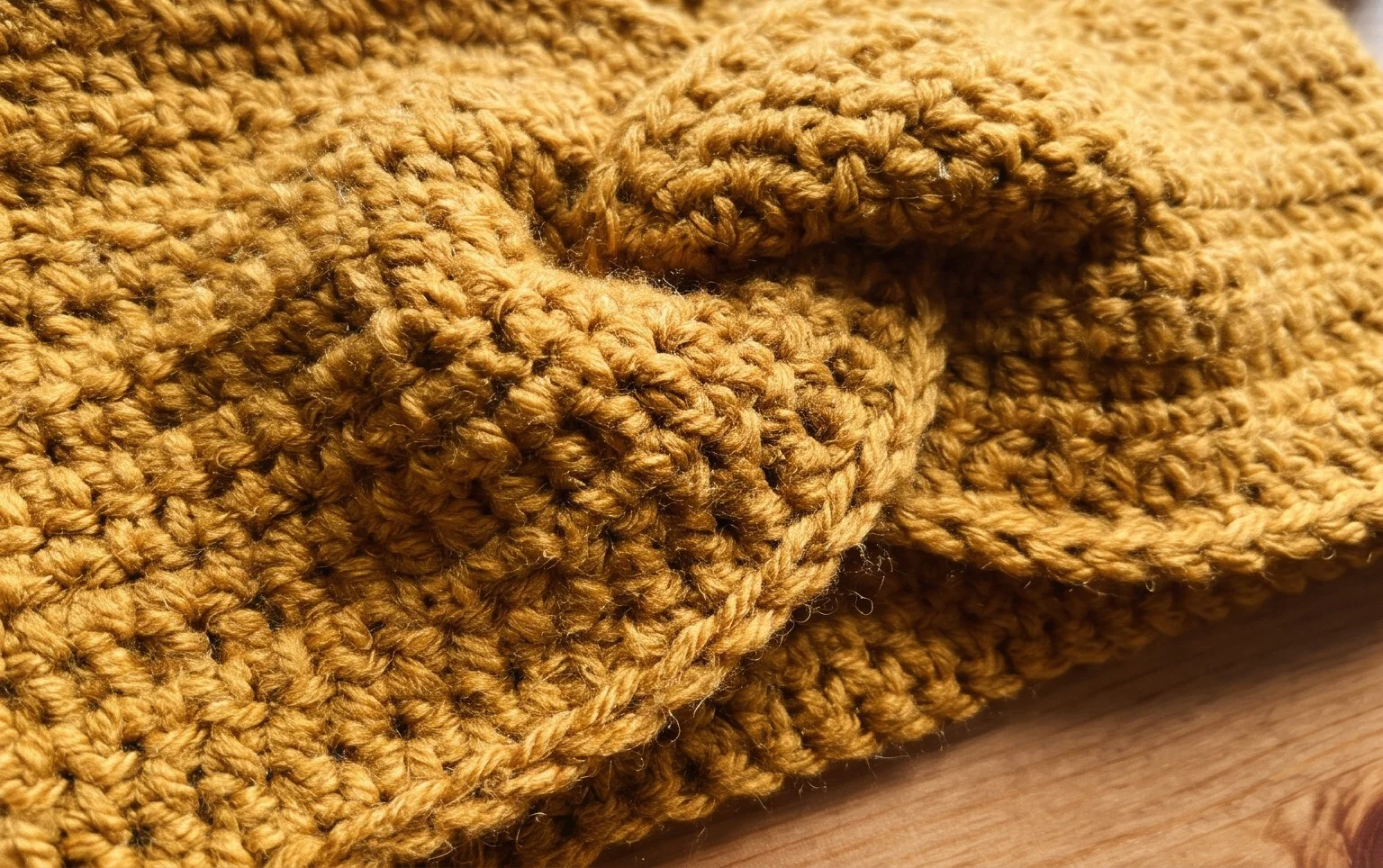
Once the ends are joined into a twist, the ribbed band has a snug, stretchy fit and a tidy gathered front that looks polished with very little finishing. Try making your next one in a different color, or add a few rows for a wider band that covers more of your ears. Check the fit around your head before sewing the seam so the finished piece stays comfortably in place without feeling tight. When yours is ready, share a photo on Pinterest or your favorite social platform; finished projects are lovely to see in different yarns and colors. Then explore more free crochet patterns on the blog for another small project to keep your hook busy.