Free Christmas Garland Crochet Patterns for Cozy Holidays
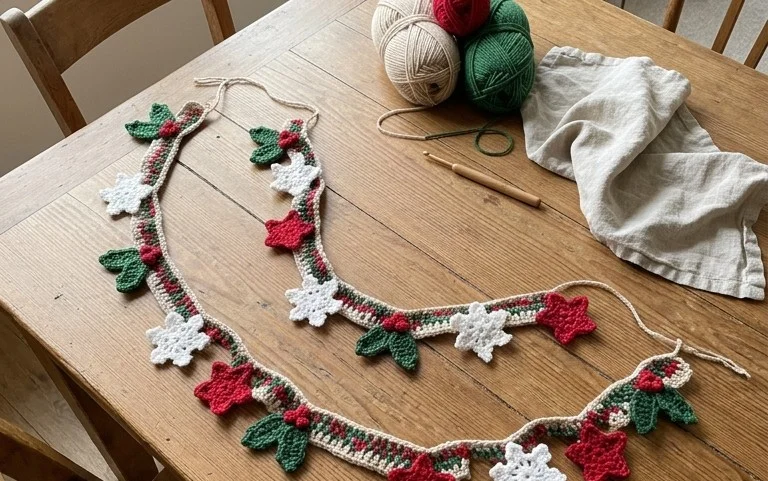
Soft yarn turns into a row of little trees, stars, and other festive shapes that bring a handmade touch to a mantel, doorway, or holiday table. These Christmas garlands suit beginners who want to practise chains and basic crochet stitches, as well as experienced makers looking for a small project to finish between larger gifts. Each strand is satisfying to make because the motifs take shape quickly, and you can adjust the length to fit the space you plan to decorate. Choose cotton for crisp, defined shapes or acrylic for a light, flexible garland. The patterns explain how to work the stitches and join the pieces into a strand, with practical notes for neat edges and simple finishing.
Why You’ll Love This Pattern
A firm cotton dishcloth with a plain single-crochet fabric is useful at the sink and simple to wash after everyday kitchen jobs. This beginner pattern uses one stitch throughout, so you can focus on keeping the edges straight and the rows even.
The small rectangle is easy to finish in a few relaxed sessions, and one skein of worsted cotton is usually enough. It also makes a practical handmade gift: fold the cloth and tie it with kitchen twine, or pair it with a bar of soap.
The rows were easy to count, and the cotton made a sturdy cloth that washed well. I kept a marker in the last stitch so the sides stayed straight.
— Example review, beginner crocheter
Pattern Overview & Skill Level
- Skill Level: Beginner. You need to chain and make single crochet stitches.
- Approximate Time: About 2–3 hours, depending on your pace and how often you stop to check the edges.
- Construction: A flat rectangle worked back and forth in rows, then finished by weaving in the two yarn tails. There is no border or seam.
- Finished Dimensions & Sizing: Approximately 8.5 × 8 inches (21.5 × 20 cm) when gauge is met. The fabric may relax slightly after washing.
Materials & Supplies Needed
- Yarn: About 75–90 yd (69–82 m) of worsted-weight (#4) 100% cotton yarn in one color. Cotton is absorbent and handles regular washing well.
- Hook: 5.0 mm (US H-8) crochet hook. Use the hook that gives you the stated gauge; individual tension can change the finished size.
- Notions: Tapestry needle for weaving in ends, scissors, and a ruler or tape measure. A removable stitch marker can help identify the last stitch of each row.
- Substitutions: A similar-weight cotton or cotton-linen yarn is a good substitute. Check the yarn label and make a gauge swatch, since a thicker or thinner yarn changes the cloth’s dimensions and yardage. Acrylic can be used, but it is less absorbent and may feel different at the sink.
Gauge: 14 single crochet stitches and 16 rows measure about 4 × 4 inches (10 × 10 cm) in the main fabric. Wash and dry your swatch as you plan to care for the finished cloth before measuring. If you have more stitches per 4 inches, try a larger hook; if you have fewer, try a smaller hook.
Stitch Guide & Abbreviations (US Terms)
- ch = chain.
- sc = single crochet. Insert the hook into the stitch, yarn over and pull up a loop, yarn over again and pull through both loops on the hook.
- st(s) = stitch(es).
- rep = repeat.
The turning chain does not count as a stitch in this pattern. Work the first single crochet into the first stitch of the row, directly beside the turning chain.
Step-by-Step Pattern Instructions
Dishcloth
With the 5.0 mm hook and cotton yarn, make a foundation chain that is not too tight. Keep the loops even so the lower edge does not pull in. The turning chain at the start of each row is for height only and is not included in the stitch count.
- Row 1: Sc in the second ch from the hook and in each ch across. Turn. (30 sts)
- Row 2: Ch 1. Sc in each st across, including the final stitch. Turn. (30 sts)
- Rows 3–32: Rep Row 2 thirty times. Each row has 30 sc. Do not skip the first stitch after turning, and make the last sc into the last stitch of the previous row. (30 sts each row)
After Row 32, measure the cloth. At the stated gauge, it should be close to 8.5 inches wide and 8 inches tall. If it is shorter than 8 inches, you can add a few more rows; the finished cloth will use a little more yarn. Fasten off, leaving a tail of about 6 inches (15 cm). Thread the tail through the tapestry needle and weave it through several stitches on the wrong side. Weave in the starting tail the same way, changing direction once so it is less likely to work loose. Trim the remaining yarn close to the fabric without cutting the stitches.
Care & Washing Instructions
- Wash cotton in warm water, up to about 40°C (104°F), with similar colors and a regular laundry detergent.
- Lay the cloth flat to dry, or follow the yarn label if it allows tumble drying; high heat can change the feel of cotton.
- While damp, smooth the sides and corners back into a rectangle. Blocking is optional, but gentle reshaping helps if the edges have curled.
Pro Tips & Common Mistakes to Avoid
- Keep a relaxed, consistent tension. A very tight foundation chain can make the bottom edge narrower than the rest of the cloth; loosen the chain or use a slightly larger hook just for it.
- Count the 30 stitches at the end of each row. Put a removable marker in the first or last stitch if you tend to miss the edge stitch while turning.
- Weave each yarn tail through the wrong side of several stitches, then change direction. Avoid pulling the tail so tightly that the fabric puckers.
- To change the width, add or remove foundation chains, then work one single crochet into each chain after the second chain from the hook. Each extra chain adds about 1/14 inch at the stated gauge; a wider cloth uses more yarn. Add rows to change the length.
Frequently Asked Questions
Can I use a different kind of yarn?
Yes. A similar-weight cotton or cotton blend is the closest substitute for absorbency and a firm texture. If you use a different fiber or yarn thickness, make a washed gauge swatch first because both the size and how the cloth works at the sink may change.
How can I make the dishcloth larger or smaller?
Change the foundation chain to adjust the width and add or remove rows to adjust the height. Keep one single crochet in every stitch, and check that the stitch count stays the same across each row. A larger cloth takes more yarn and longer to dry.
Is this pattern suitable for a first crochet project?
Yes. The cloth uses chains and single crochet in straight rows, with no shaping or joining. The main challenge is remembering to work into the first and last stitches after turning, so count 30 stitches at the end of each row.
May I sell dishcloths made from this pattern?
Check the designer’s terms before selling finished items, and follow any credit or use requirements they provide. This guide does not grant commercial rights to a separately published pattern or its photographs.
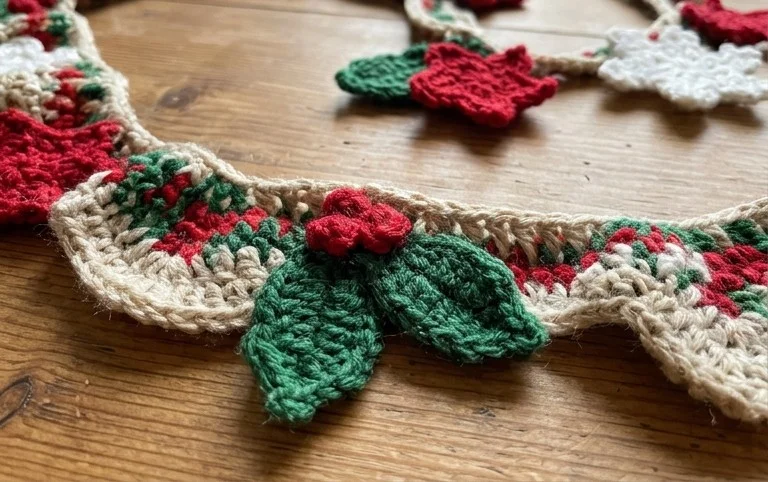
A finished crochet garland brings a soft, handmade detail to the room, whether you drape it across a mantel or hang it along a shelf. For a simple variation, work the motifs in one color for a calm look, or alternate two shades of red and green as you join them. If you make one, share a photo on Pinterest or your favorite social media platform so other crocheters can see how you styled it. You can also browse more free patterns on the blog for small seasonal projects, thoughtful handmade gifts, and decorations to bring out year after year.